How the Lunar Economy Works: Artemis, ISRU, and the Cislunar Space Race
The lunar economy is transitioning from science fiction to business plans. With Starship lowering transport costs and NASA's Artemis program driving infrastructure, the Moon could become a $100B economy by 2040.
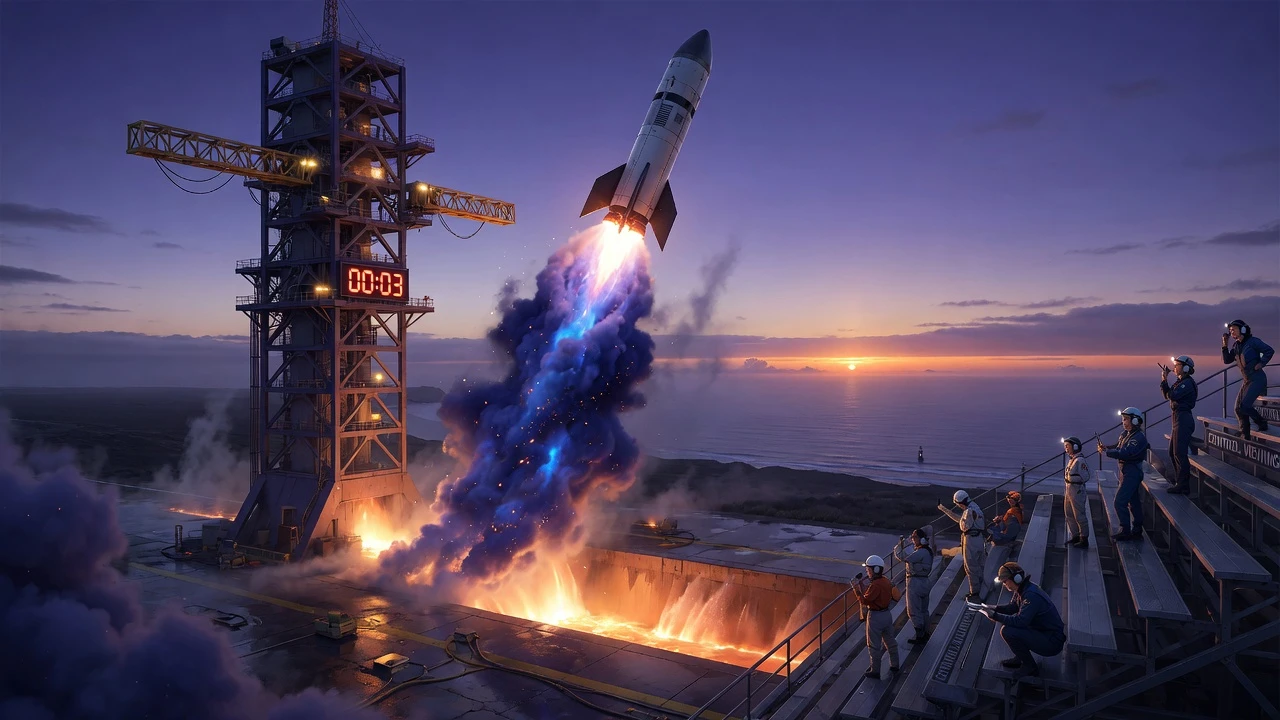
Introduction
The lunar economy is transitioning from science fiction to business plans. With Starship lowering transport costs and NASA's Artemis program driving infrastructure, the Moon could become a $100B economy by 2040.
Prerequisites
- ✓ General space knowledge
- ✓ Basic economics understanding
- ✓ Interest in space policy and commercialization
Key Concepts
Step-by-Step Guide
- 1
Understand the Lunar Resource Landscape
The Moon has resources that could support a sustainable economy: Water ice (south pole craters, ~600M tonnes estimated) — for drinking, oxygen, and rocket fuel. Rare earth elements (KREEP deposits) — for electronics. Helium-3 (in regolith) — potential fusion fuel. Regolith — for construction and radiation shielding. Metals (iron, titanium, aluminum) — extractable from regolith.
Tip: Water is the most valuable early resource — it enables fuel production (hydrogen + oxygen), reducing the need to bring fuel from Earth. - 2
Map the Artemis Program
Artemis is NASA's program for sustained lunar exploration: Artemis 1 (2022) — uncrewed orbital flight. Artemis 2 (2025) — crewed flyby. Artemis 3 (2026) — first crewed landing at south pole. Artemis 4-8 (2027-2032) — annual missions, building Lunar Gateway station and surface base. The Gateway (lunar space station) provides staging for surface missions.
textArtemis Timeline: 2022: Artemis 1 (uncrewed) 2025: Artemis 2 (crewed flyby) 2026: Artemis 3 (first landing, south pole) 2027: Artemis 4 (Gateway PPE+HALO) 2028-2032: Annual missions, surface base 2030+: Sustained human presence - 3
Evaluate ISRU Business Cases
ISRU is the key to a sustainable lunar economy. Water mining: extract ice from permanently shadowed regions, electrolyze into H2 and O2 for rocket propellant. Lunar propellant could refuel spacecraft in lunar orbit, reducing Earth launch costs by 70% for Mars missions. The business case: sell propellant to NASA and commercial operators at $5-10M/tonne.
Warning: ISRU technology is at TRL 4-5 (laboratory validation). Significant development needed before commercial operations. First ISRU demo planned for Artemis 3 (2026). - 4
Assess Lunar Mining Economics
Lunar mining requires: transport ($200/kg with Starship), power (solar or nuclear), excavation equipment (autonomous, radiation-hardened), processing (chemical/thermal extraction), and product delivery. Water mining: excavate icy regolith, heat to extract water, purify, electrolyze. Cost: $50-200M for a pilot plant, $500M-2B for commercial scale.
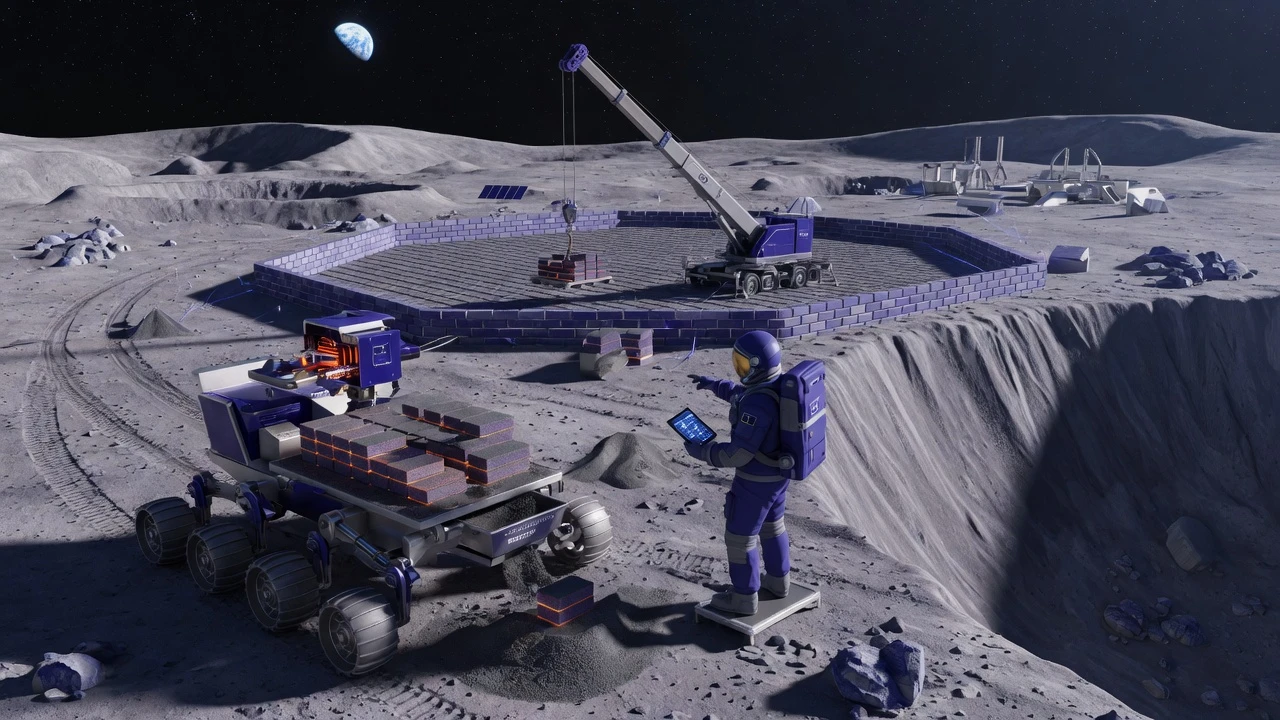
Lunar and asteroid mining share technologies — autonomous excavation, resource processing, and product delivery in harsh environments. - 5
Understand the Cislunar Economy
Cislunar space (between Earth and Moon) is a new economic zone: Lunar Gateway (NASA), commercial stations (Axiom, Starlab), satellite servicing, propellant depots, and communications relays. The DoD has established the Space Force Cislunar domain. Market projection: $10B by 2030, $50B by 2035, $100B+ by 2040.
Tip: Early commercial opportunities are in cislunar infrastructure: communications relays, navigation services, and propellant depots. These don't require surface operations. - 6
Evaluate Lunar Tourism
Lunar tourism has two models: orbital flyby ($50-100M per seat with Starship) and surface landing ($200-500M per seat). SpaceX has already sold a lunar flyby (dearMoon project, now canceled/rescheduled). The market is small but high-margin. By 2035, expect 10-50 lunar tourists per year at $20-50M per seat.
- 7
Assess Regulatory Framework
The Outer Space Treaty (1967) governs lunar activities: no sovereignty claims, peaceful purposes only, national responsibility for private activities. The Artemis Accords (2020, 50+ signatories) establish norms for lunar operations: transparency, interoperability, emergency assistance, debris mitigation, and "safety zones" for mining operations. The US has a framework for lunar resource extraction (Commercial Space Launch Competitiveness Act, 2015).
Warning: The legal status of lunar resource extraction is contested. The Artemis Accords provide a framework, but not all nations agree. China and Russia have proposed a competing lunar research base (ILRS). - 8
Identify Commercial Opportunities
Near-term (2026-2030): payload delivery, communications relays, navigation services, science instruments. Mid-term (2030-2035): ISRU propellant production, habitat construction, power generation, in-space manufacturing. Long-term (2035-2045): lunar tourism, mining for Earth return, pharmaceutical manufacturing in low-g, data centers on the Moon.
textLunar Business Timeline: 2026-2030: Payload delivery, comms relay 2030-2035: ISRU propellant, habitats, power 2035-2040: Tourism, manufacturing, mining 2040-2045: Full economy, Earth-Moon supply chain Key Players: - SpaceX: Transport - Blue Origin: Landers, habitats - Axiom: Commercial stations - Astrobotic, Intuitive: Payload delivery - Lunar Resources: ISRU - 9
Understand Lunar Infrastructure Needs
A lunar economy requires infrastructure: Power (solar arrays near south pole get near-continuous light; nuclear reactors for base power). Communications (lunar relay satellites for far-side coverage). Navigation (lunar GPS equivalent). Transportation (landers, rovers, hoppers). Surface infrastructure (habitats, airlocks, EVA suits, rovers). Each represents a commercial opportunity.
- 10
Assess Risks and Challenges
Lunar surface challenges: radiation (no atmosphere, 200x Earth exposure), temperature extremes (-170°C to +120°C), abrasive dust (sharp, no erosion), 14-day night cycle (solar power gap), low gravity (1/6g, unknown long-term effects). Equipment must be radiation-hardened, dust-tolerant, and thermally managed. Human operations require significant protection.
Tip: Lunar dust is the #1 operational challenge — it abrades surfaces, degrades solar panels, and poses health risks. Mitigation: airlocks with dust removal, sealed suits, and magnetic filtration. - 11
Project the Economic Future
The lunar economy will develop in phases: Government-driven (2026-2032, Artemis funding), Commercial infrastructure (2030-2038, comms/power/transport), Resource utilization (2035-2045, ISRU propellant and mining), Self-sustaining (2045+, Earth-Moon trade). Key enablers: Starship economics, ISRU technology maturation, and regulatory clarity. Total market: $10B by 2030, $100B by 2040.
Summary
The lunar economy is emerging driven by NASA's Artemis program, SpaceX's Starship economics, and ISRU technology. Water ice at the lunar south pole is the key early resource — enabling propellant production that reduces Mars mission costs by 70%. The market will grow from government-funded science (2026-2030) to commercial infrastructure (2030-2035) to resource utilization (2035-2045). Key challenges: ISRU technology maturity, regulatory framework, lunar dust, and radiation. Total market projection: $100B by 2040.
Frequently Asked Questions
Artemis 3 targets 2026 for the first crewed landing since 1972, at the lunar south pole. Annual missions are planned from 2027 onward, building toward a sustained presence by 2030.
The Outer Space Treaty prohibits sovereignty claims but does not explicitly ban resource extraction. The US (2015) and Luxembourg (2017) have passed laws allowing private lunar resource ownership. The Artemis Accords establish "safety zones" for mining operations. Legal consensus is still evolving.
Water ice — it enables propellant production (H2 + O2), life support, and radiation shielding. Lunar-derived propellant could refuel Mars-bound spacecraft, reducing the mass that must be launched from Earth by 70%.
With Starship: ~$500/kg to the lunar surface (vs $1M+/kg with current architectures). This is the enabling cost reduction that makes the lunar economy viable.
Test Your Knowledge
1. What is ISRU and why is it important for the lunar economy?
ISRU (In-Situ Resource Utilization) is the practice of using local resources (water, regolith, minerals) instead of bringing everything from Earth. It is critical because launching mass from Earth is extremely expensive.
2. Why is the lunar south pole the target for Artemis landings?
The south pole has permanently shadowed craters that trap water ice, and adjacent peaks that receive near-continuous sunlight for solar power. This combination of resources and energy makes it the ideal location.
3. What is the projected size of the lunar economy by 2040?
Multiple market analyses project a $100B lunar economy by 2040, driven by ISRU propellant, communications, tourism, and infrastructure. Government funding (Artemis) seeds the initial development.